
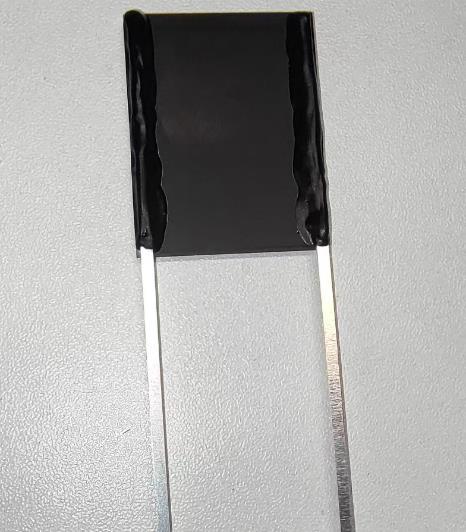
TTV Thermal Test Vehicle (RTX 5090)
Aluminum nitride thermal test substrate delivering a 600 W heat load for NVIDIA RTX 5090 cold-plate and liquid-cooling validation.
The EAK-TTV series is a thermal test vehicle (heating substrate) custom-developed by Shenzhen Songhao Electronic Co., Ltd. for the high-power cooling scenarios of NVIDIA RTX 5090 graphics cards. Built on a high-thermal-conductivity aluminum nitride substrate with a high-temperature sintered heating layer, it reproduces a stable 600 W heat load for cold-plate and liquid-cooling validation, preventing thermal throttling and aging damage during sustained full-load operation.
Insulation withstand voltage exceeds 2500 V, offering a wide electrical safety margin. The standardized 38.4 × 30.3 × 3 mm outline fits the original RTX 5090 mounting space without structural rework. Surface roughness is controlled to Ra < 0.3 μm with flatness < 0.3%, minimizing interface thermal resistance against the cold-plate contact surface. Bending strength of ≥450 MPa and a temperature coefficient of ≤100 PPM keep performance stable through high-low temperature cycling.
The product reserves standardized expansion structures — external power leads, customized mounting brackets and thermocouple measuring points — and uses an integrated single-heat-source design that is easy to wire and debug, compatible with both automated line assembly and manual module assembly.
Datasheet downloads: English (PDF) · 中文版 (PDF)
EAK-TTV 系列是深圳市崧皓电子有限责任公司为 NVIDIA RTX 5090 高端显卡大功率散热场景定制开发的热测试基板(TTV)。依托氮化铝高导热基板与高温烧结发热层工艺,可稳定复现 600W 满载热负荷,用于冷板与液冷散热系统的调试验证,避免硬件持续高负载下的高温降频与老化损坏。
产品绝缘耐压突破 2500V,电气安全冗余高;整机外形标准化 38.4 × 30.3 × 3 mm,可直接匹配 RTX 5090 原装安装空间。表面粗糙度 Ra < 0.3μm、平整度 < 0.3%,与冷板接触面紧密贴合,大幅降低界面热阻;抗弯强度 ≥450MPa,温度系数 ≤100PPM,高低温循环工况下热性能稳定。
产品预留标准化拓展结构,支持外接电源引线、定制安装支架与热电偶测温点加装,采用单热源无分区一体化设计,布线简单、温控调试便捷,兼容自动化产线与人工模组装配。
规格书下载:英文版与中文版 PDF 请见页面下载按钮及上方链接。
- Cold-plate and liquid-cooling module validation for high-end GPUs
- AI computing server thermal design verification
- High-end graphic workstation and rendering host cooling tests
- R&D model selection, reliability testing and incoming inspection
- External power lead assembly
- Customized mounting brackets
- Thermocouple temperature measuring points
- Non-standard modifications confirmed via custom change order