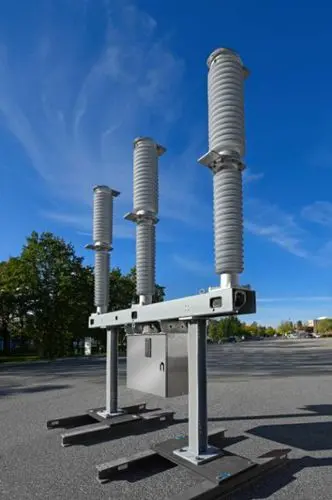
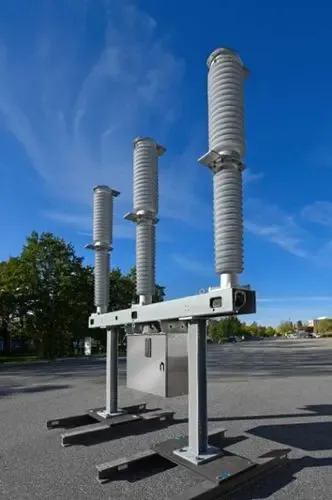
 SF6 gas circuit breaker
In power systems, there are various types of operating overvoltages, each with different characteristics, and circuit breaker operations are the cause of most operating overvoltages. In ultra-high voltage (UHV) power grids, with the improvement of circuit breaker arc extinction capability and the installation of surge arresters, the overvoltage during the closing of a vacant line has become the primary operating overvoltage. Particularly, for long-distance ultra-high voltage transmission lines, the overvoltage during the closing of a vacant line becomes more severe. In power systems, line closing operations are common. To limit the overvoltage during the closing of a vacant line in long-distance ultra-high voltage transmission lines, circuit breakers are equipped with parallel resistors as the main measure to restrict the overvoltage. The resistance of these resistors (i.e., closing resistors) used to limit the overvoltage during vacant line closing is about several hundred ohms. In a typical 500 kV circuit breaker, during the closing process, the auxiliary contact Kf closes first, connecting the closing resistor Rf to the system. After about 10 milliseconds, the main contacts Kz close, and after another few tens of milliseconds, Kf opens, taking Rf out of the system. This completes the entire operation of one closing. The opening operation is the opposite of this.
Regarding the function of the circuit breaker closing resistor, the working principle and implementation methods of the circuit breaker closing resistor, how to calculate the formula and methods for determining the circuit breaker closing resistor, and the concepts of accelerated reclosing and automatic reclosing after reclosing.
1. Function of the Circuit Breaker Closing Resistor
The closure and disconnection of a vacant line in a power system will generate operating overvoltages. Therefore, closing resistors need to be installed on circuit breakers to release the energy in the power grid, thereby protecting the electrical equipment of the grid. The closing resistor is connected a few milliseconds before the main contacts (arc extinction chamber) close and is automatically disconnected several milliseconds after the main contacts close.
The function of the closing resistor is to disconnect before the main contacts close when the circuit breaker opens, and to connect first during closing. When the main contacts close, the closing resistor is short-circuited and disconnected. This operation can prevent operating overvoltages.
2. Function of High Voltage Circuit Breaker Closing Resistor
- Closing Resistor Principle
The operation of closing and disconnecting a vacant line in a power system will produce operating overvoltages. Therefore, closing resistors should be installed on circuit breakers to release the energy in the power grid, thus protecting the electrical equipment of the grid. The closing resistor is connected a few milliseconds before the main contacts (arc extinction chamber) close and is automatically disconnected several milliseconds after the main contacts close.
- Implementation Method
When the circuit breaker opens, the main contacts disconnect first; during closing, the closing resistor is first connected, and when the main contacts close, it is short-circuited and disconnected. This method helps to prevent operating overvoltages.
3. How to Calculate the Circuit Breaker Closing Resistor
To install a closing resistor on the circuit breaker and release the energy of the power grid to protect the electrical equipment, the closing resistor is connected a few milliseconds before the main contacts (arc extinction chamber) close and is automatically disconnected several milliseconds after the main contacts close.
Answer:
(1) Measuring the Closing Resistor Value.
The main function of the closing resistor is to reduce the overvoltage during the reclosing of the line. It is a carbon-sintered resistive element with high current carrying capacity. After multiple current passes, its characteristics degrade and affect functionality, so monitoring the change in resistance value is necessary.
(2) **Measuring the Effective Connection Time of the Closing Resistor.**
The effective connection time of the circuit breaker closing resistor refers to the period from the moment the auxiliary contact is switched on to the closing of the main contacts. Generally, this time is about 10 ± 2 ms.
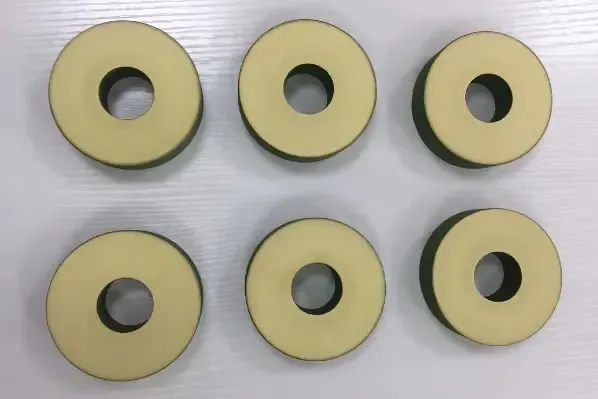 Closing Resistance
Knowledge about Closing Operations.
What is meant by “accelerated reclosing”?
Answer:When a protected line experiences a fault, the protection device selectively removes the faulted line while simultaneously initiating a reclosing action. If the reclosing occurs during a permanent fault, the protection device immediately operates to disconnect the circuit breaker again without any time delay and without selection. This type of protection device is called “accelerated reclosing after reclosing,” and it can typically be implemented by adding an intermediate relay.
What is automatic reclosing?
Answer:An automatic reclosing device is one that allows a circuit breaker to automatically close again quickly without the need for manual operation after it has tripped.