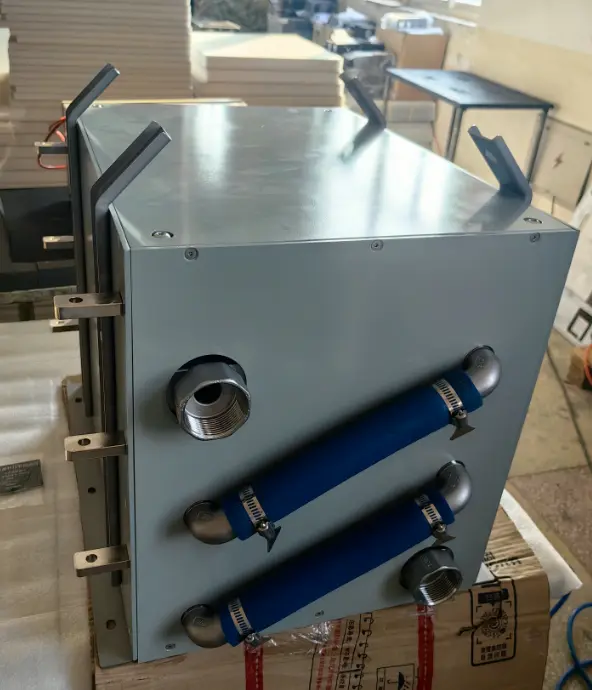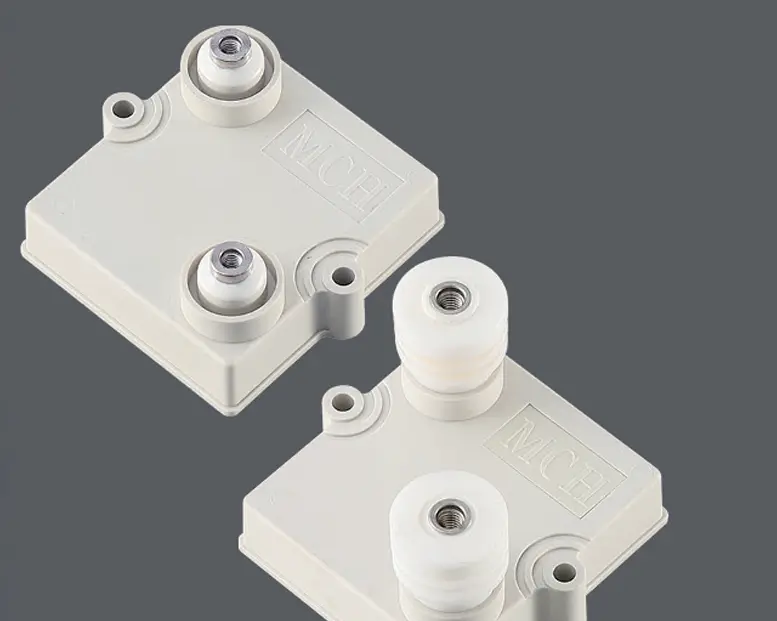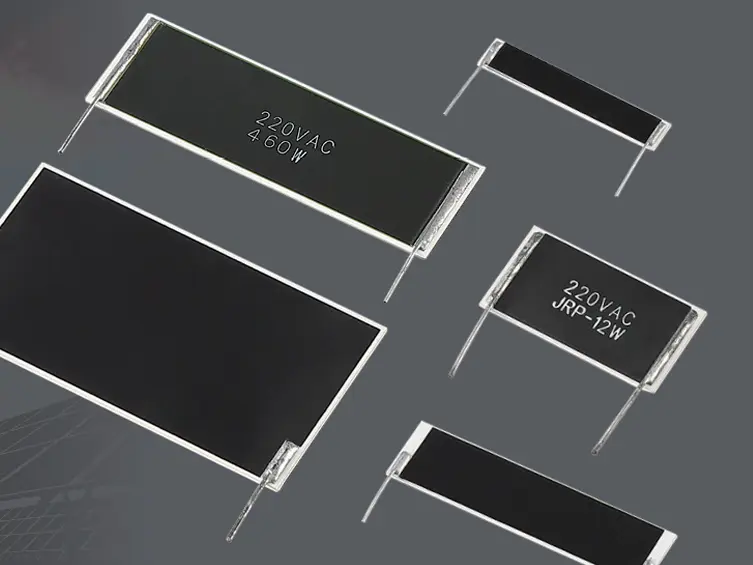
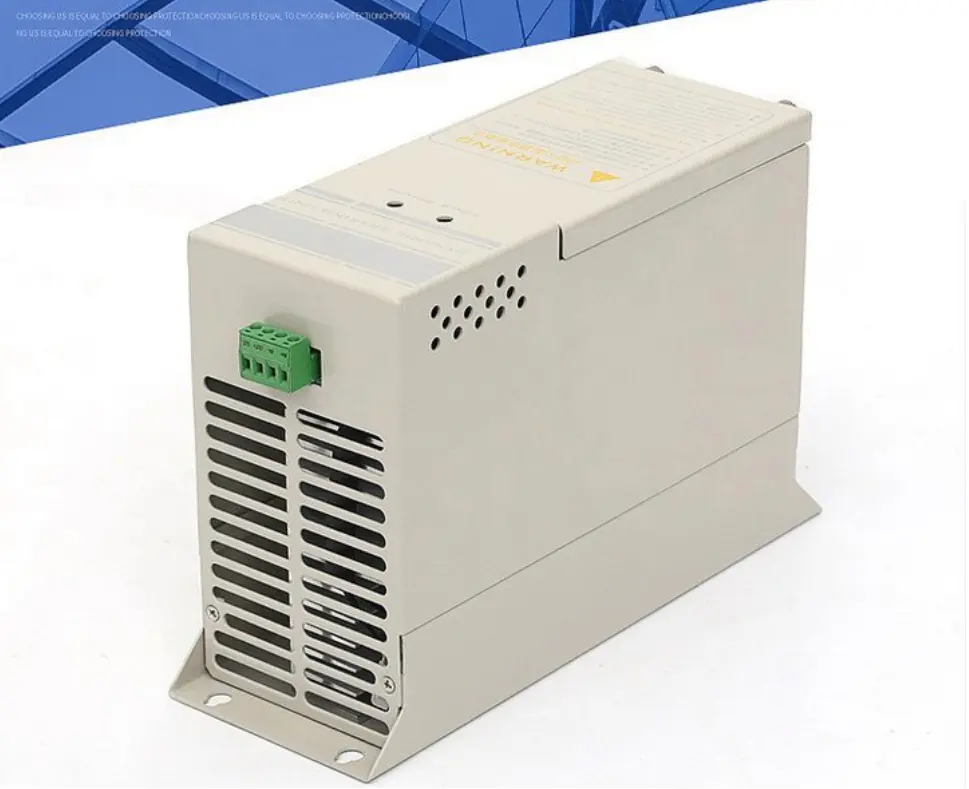
In power electronics systems, the braking chopper is a critical component used to absorb regenerative energy from motors and prevent overvoltage on the DC bus. Its core functionality relies on the efficient operation of a chopper circuit, where switching frequency plays a pivotal role in system performance.
So, what determines the switching frequency of a chopper circuit? This article explores the key factors—design objectives, component selection, operating conditions, and application requirements—that influence switching frequency, with a focus on real-world applications of braking choppers.
1. What Is Switching Frequency in a Chopper Circuit?
A chopper circuit controls the on/off state of switching devices (such as IGBTs or MOSFETs) to “chop” a DC voltage into pulses, thereby regulating output voltage or managing energy flow. The switching frequency refers to how many times per second the switch completes a full on-off cycle, measured in Hertz (Hz)—typically ranging from several kHz to hundreds of kHz.
Higher switching frequencies reduce the size of filters and improve dynamic response, but they also increase switching losses and electromagnetic interference (EMI). Therefore, selecting the optimal frequency involves balancing performance, efficiency, and reliability.
2. Four Key Factors That Determine Chopper Circuit Switching Frequency
1. Circuit Design Objectives Define the Frequency Range
Different chopper applications have distinct requirements for switching frequency:
- Braking Chopper: Used in inverters or servo systems to dissipate regenerative motor energy. The primary goal is to stabilize the DC bus voltage and prevent overvoltage trips, so switching frequencies are typically set between 2 kHz and 20 kHz, balancing efficiency and thermal management.
- DC-DC Converters: Prioritize high efficiency and compact size, often operating at 50 kHz to 500 kHz, or even higher.
- PWM Voltage Control Systems: Require fast dynamic response, favoring higher frequencies for improved control precision.
2. Switching Device Characteristics Set the Upper Limit
The physical limit of switching frequency depends heavily on the power semiconductor used:
| Switching Speed(turn-on/turn-off time) | Faster transitions enable higher frequencies |
| On-State Resistance (Rds(on)) | Affects conduction loss, especially significant at high frequency |
| Maximum Switching Frequency (f_max) | Specified in datasheets; IGBTs typically support 20–100 kHz, MOSFETs can reach MHz levels |
| Thermal Stability | High-frequency operation increases temperature rise, affecting long-term reliability |
For example, IGBT modules are commonly used in high-power braking choppers due to their high voltage and current handling capability, but are generally limited to frequencies below 40 kHz. In contrast, MOSFETs may be used in low-power systems to achieve much higher frequencies.
3. Operating Conditions Constrain Practical Frequency
Even if a device supports high-frequency operation, real-world conditions can limit usable frequency:
- DC Bus Voltage Level: Higher voltages lead to significantly increased switching losses (proportional to V²), requiring lower frequencies to manage heat.
- Braking Current Magnitude: Large currents combined with high frequency can cause excessive heating, necessitating derating.
- Ambient Temperature & Cooling Capacity: Poor heat dissipation in enclosed cabinets forces frequency reduction to avoid overheating.
- EMI Requirements: High-frequency switching generates electromagnetic noise, so industrial designs often avoid sensitive frequency bands (e.g., AM radio range).
Real-World Example: A braking chopper in a wind turbine pitch control system automatically reduces its switching frequency by 10% during summer months to prevent IGBT thermal alarms.
4. Application Requirements Shape Optimal Frequency
Different applications demand different trade-offs:
| Industrial Drives | Medium (5–20 kHz) | Balance of efficiency, noise, and cooling |
| Electric Vehicle Motor Braking | Higher (20–50 kHz) | Faster response, reduced torque ripple |
| Solar Inverter Auxiliary Circuits | High (>50 kHz) | Miniaturization and filter size reduction |
| Rail Traction Systems | Low to Medium (1–10 kHz) | Reliability and thermal management in high-power systems |
For braking choppers, higher frequency is not always better. The optimal choice balances energy dissipation, thermal design, cost, EMI, and system longevity.
3. How to Choose the Right Switching Frequency? — Design Recommendations
- Consult Device Datasheets: Select IGBTs or MOSFETs rated for your target frequency and thermal conditions.
- Simulate Performance: Use tools like PLECS, Simulink, or SPICE to model losses and temperature rise at different frequencies.
- Validate with Testing: Measure junction temperature, efficiency, and noise during prototype testing to fine-tune frequency settings.
- Adopt Smart Control: Implement adaptive frequency control—use higher frequencies under light load, lower them under heavy load for thermal protection.
4. Summary: What Determines the Switching Frequency of a Chopper Circuit?
The switching frequency of a chopper circuit is determined by four interrelated factors:
- Circuit Design Goals (e.g., overvoltage protection, voltage regulation)
- Switching Device Characteristics (IGBT/MOSFET speed, loss, thermal rating)
- Operating Conditions (bus voltage, current, ambient temperature, cooling)
- Application-Specific Requirements (response speed, noise, size, cost)
In braking chopper applications—where reliability is paramount—switching frequency must be carefully chosen to balance efficiency, thermal performance, EMI, and system stability. Pushing for higher frequency without considering thermal and stress impacts can lead to premature failure.