EAK Carbon Ceramic Resistors for 550 kV Circuit Breakers
The carbon ceramic resistor developed by EAK for 550 kV circuit breakers has successfully passed all application tests for circuit breakers, marking a solid step towards the localization of this product. This achievement indicates that the performance of the domestically developed carbon ceramic resistors meets user requirements and is significant for ensuring the safety and controllability of the power transmission and distribution equipment supply chain. Carbon ceramic resistors are key components of ultra-high and extra-high voltage switches, used to release grid energy and protect electrical equipment during the connection and disconnection of idle circuits, which is crucial for the safe and stable operation of power systems.
EAK has conducted in-depth analysis and discussions on the characteristics and mechanisms of carbon ceramic resistors, laying a solid theoretical foundation for the smooth progress of the project. The uniform dispersion of conductive carbon materials within a ceramic matrix is challenging, affecting the conductivity of the material and making it difficult for the carbon-containing ceramic body to achieve high density and defect-free status during the forming process, which increases production difficulty and reduces product quality and reliability.
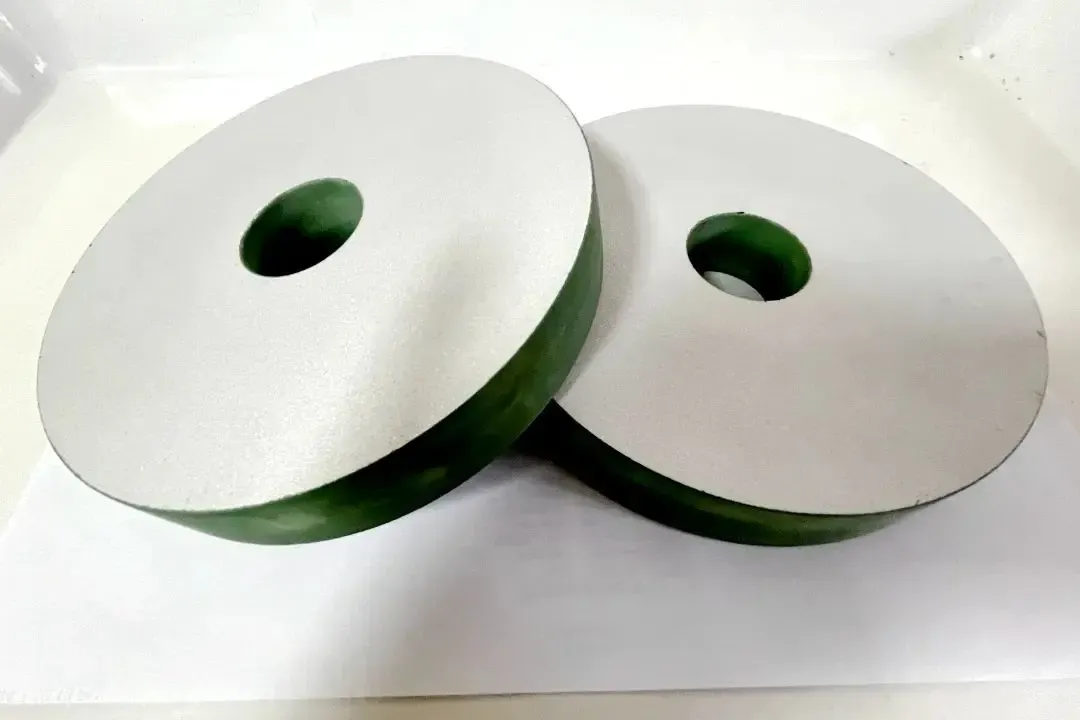 To enhance the performance of the carbon ceramic resistor material, project team members reached a consensus and worked tirelessly, conducting uninterrupted and iterative sample trials. Over 80 rounds of optimization experiments were carried out, ultimately resolving the issue of uniform mixing of the ceramic matrix with carbon materials and successfully producing a densely packed ceramic body with consistent density.
To address the issues of carbon material oxidation and its interference with the sintering of the ceramic matrix, the project team coordinated various resources to explore the optimal sintering process for carbon-containing ceramic bodies. They selected various protective fillers and different sintering atmospheres, conducting cross-combination tests with multiple sintering techniques, attempting more than 20 different sintering processes. To accurately record the sintering process and identify influencing factors, team members monitored the sintering equipment 24/7, documenting the process in detail. This effort led to the determination of the optimal sintering program, greatly improving the electrical performance of the carbon ceramic resistors and significantly enhancing the uniformity and stability of the specimens, successfully overcoming the challenges related to carbon material oxidation and interference with the ceramic matrix sintering.
As a functional ceramic, the various performances of the closing resistor plate are interrelated and affected by each other. Additionally, due to significant technological embargoes from foreign countries, accessing relevant technical patents and similar research literature has been extremely difficult, posing considerable challenges for research and development. During the experimental period, the project team closely monitored various subtle phenomena, deeply analyzing every process parameter, and comprehensively summarizing and organizing performance testing data. By utilizing extensive data compilation and analysis, they successfully established a theoretical method for regulating the mechanical, thermal, and electrical properties of carbon ceramic resistors.
EAK has established a research and development platform that has successively completed fundamental material research and manufacturing process studies, forming testing technology standards for this product. They have independently developed platforms for testing key parameters such as voltage coefficient, temperature coefficient, and energy injection, becoming the first enterprise in the industry to successfully develop carbon ceramic resistors for 550 kV circuit breakers.